C-Type vs 4-Pillar Hydraulic Press: How to Choose the Right Frame
C-frame or four-pillar? How each hydraulic press frame carries load, how easy it is to load parts, and which jobs suit each one.
In this article
Once you know the tonnage you need, the next big decision is the frame. Most hydraulic presses are built either as a C-type (C-frame, open-front) press or as a 4-pillar (four-column) press. The frame decides how the load is carried, how easy it is to load parts, and which jobs the press can do well. Here is how to choose.
What is a C-type hydraulic press?
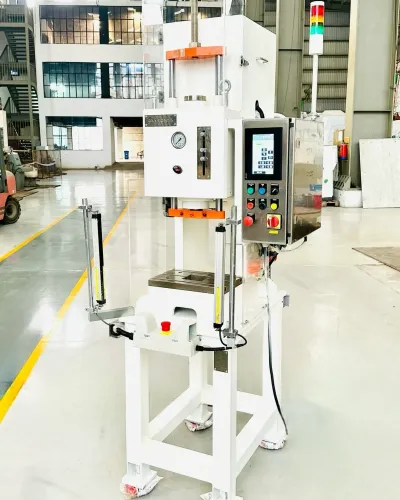
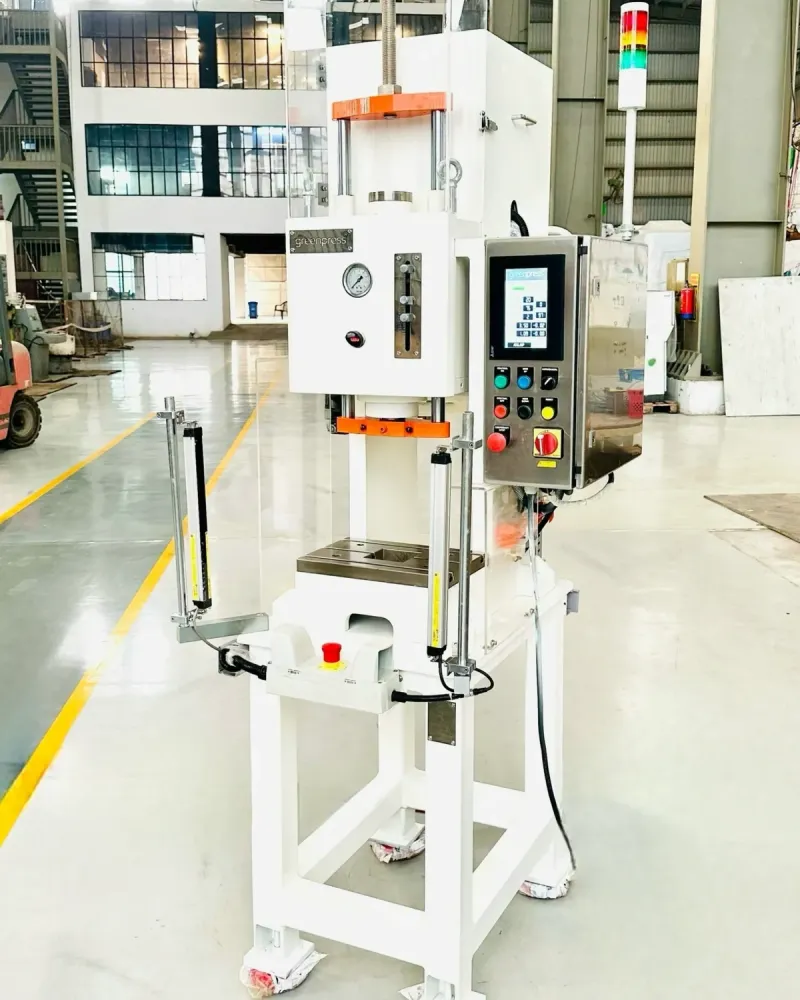
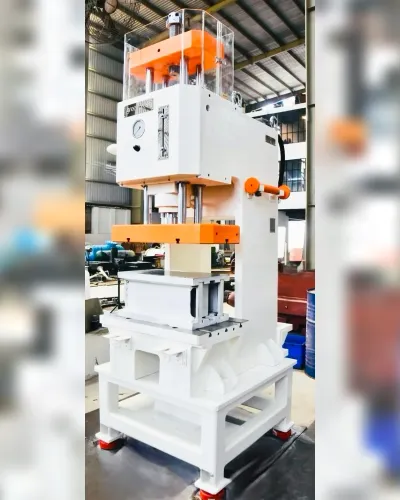
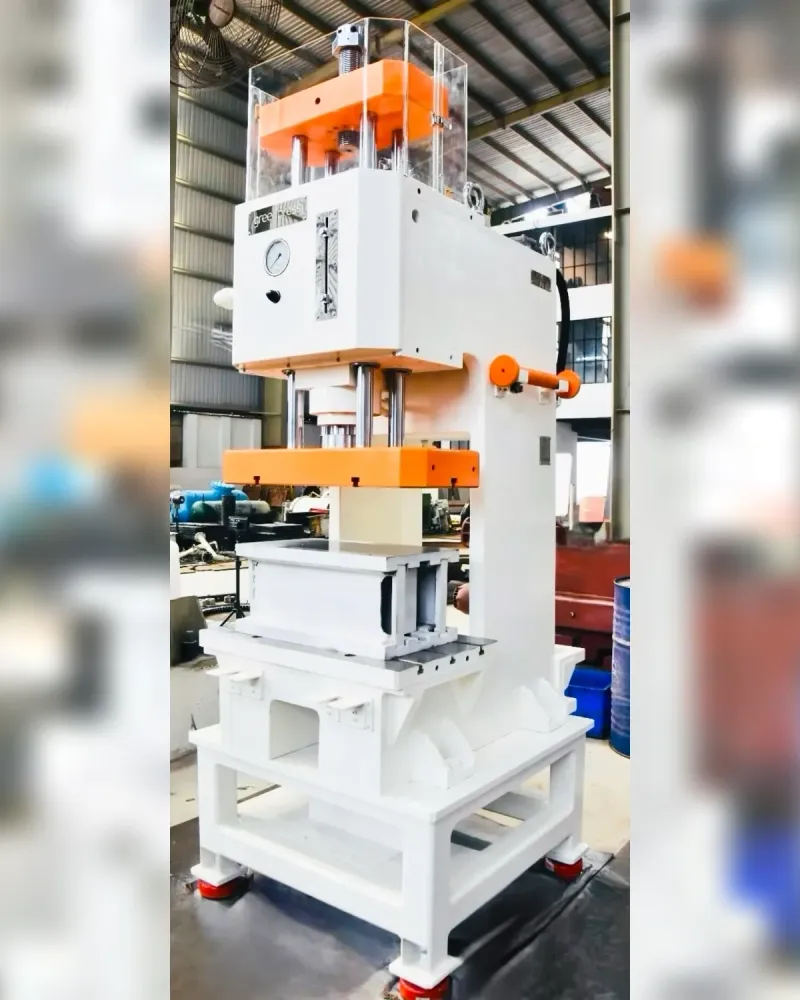
A C-type press has a single frame shaped like the letter C. The cylinder sits at the top of the C and the bed at the bottom, with the front and both sides open. The operator can reach the die from three sides, which makes loading and unloading quick.
Good for: press-fitting bearings and bushes, assembly, straightening, punching, marking, small forming jobs and work where parts are loaded by hand.
Keep in mind: under very high load, a C-frame opens slightly at the front (deflection). A well-designed, rigid frame keeps this small, but for large dies or off-centre loads a 4-pillar frame is better.
What is a 4-pillar hydraulic press?
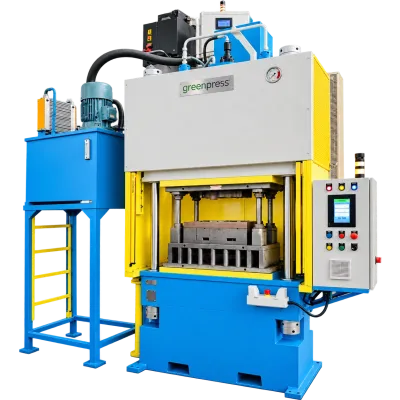
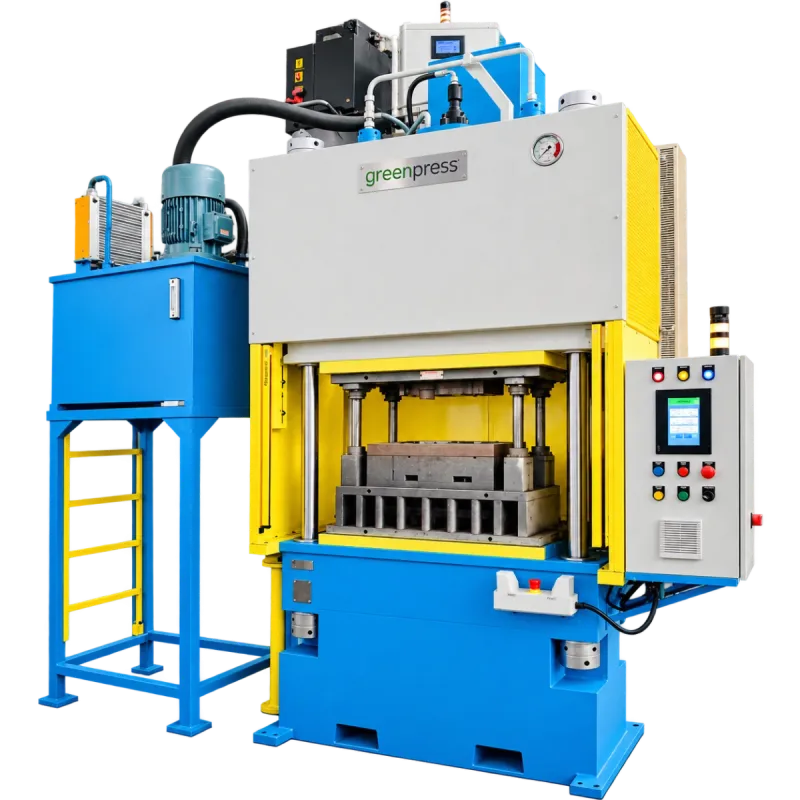
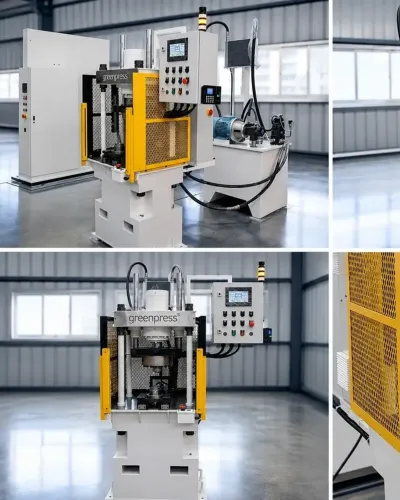
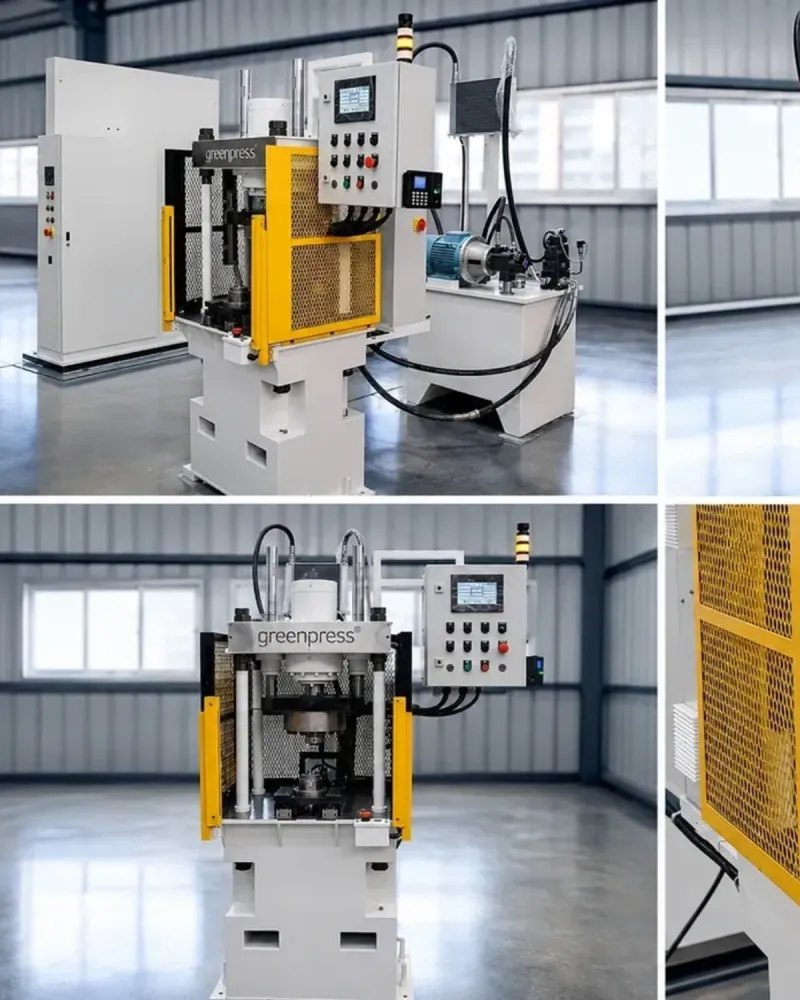
A 4-pillar press has four columns that tie the top crown to the bed. The moving platen (slide) runs on the pillars, guided at four corners. The load is shared evenly by all four pillars, so the slide stays parallel to the bed even with large dies.
Good for: deep drawing, sheet metal forming, forging, trimming, powder compaction, rubber and composite moulding, and any job with a large die or uneven load.
Keep in mind: access is between the pillars, so loading is usually from the front and back. A moving table can bring the die out for easy loading.
C-type vs 4-pillar: quick comparison
| Point | C-type | 4-pillar |
|---|---|---|
| Access | Open on three sides | Between pillars (front/back) |
| Rigidity under high load | Good for centred loads | Very high, even for large dies |
| Bed size | Smaller | Larger |
| Floor space | Compact | Larger |
| Typical jobs | Assembly, press-fitting, straightening, small forming | Deep drawing, forming, forging, moulding, trimming |
How to decide
- If parts are small and loaded by hand many times a shift, start with a C-type.
- If the die is large, the load is off-centre, or the job is drawing, forming or moulding, choose a 4-pillar.
- If parallelism between slide and bed is critical for part quality, choose a 4-pillar.
- If floor space is tight and the job is light, a C-type saves space.
GreenPress® C-type and 4-pillar presses
Faridabad-based GreenPress® builds both frames — for example the 3 ton C-type hydraulic press, the C-type hydraulic press range, the 4-pillar hydraulic press range and the 25 ton 4-pillar press for ball-joint forming. Options include LVDT position sensors, force monitoring, light curtains and full guarding.
Not sure which frame suits your part? Send us your requirement and our engineers will recommend the right press.